Friday, 6 July 2012
Canadian perspective on the A4 move to Britain
Note the Canadians suggesting one could be used to break the speed record !!!!!!

Tuesday, 3 July 2012
Six A4s in a line: Railway Magazine August 2012

The discussion from this morning:
· · · Share

William Snook ill certainly be going to see that spectacle. Really looking forward to it! Hope the two returnees are in steam!3 hours ago ·
Robert Forsythe according to the feature, the two returnees are not in steam but will have quite a lot of attention, one with valences and bell and LNER garter blue

They'll be 3 static (Mallard & 2 visiting ones) and 3 in steam (Bittern, Sir Nig & South africa)
3 hours ago via Mobile ·
William Snook Robert, its 60010 Dominion of Canada that is in a bad way. 60008 DDE is in a fairly ok state for its length of static display
3 hours ago · · 1
Alex Betteney Would love to go and see them, but why the money issue? Unless of course the nrm are going to charge £50 entry fee?
3 hours ago via Mobile ·
David Brown 60010 has had cosmetic attention recently but at least was kept indoors while many of Canada's own heritage locos sat rusting in the rain. Of course, if it hadn't gone to Canada it would have been scrapped here as it had been badly robbed after storage by BR. It would need a lot to make it a runner again.
Robert Forsythe where has the £50 entry fee come from Alex? that was not in Rly Mag. it is very pertinent. as you can see my question is about audience testing which in the light of Railfest visitor numbers is relevant. From the Rly Mag article there is little evidence that the decision to do all this is based on an "evidenced study" of likely numbers or that it is how it appears to me. It looks as if the director faced with a perceived need to celebrate the 75th anniversary "spectacularly" came up with the project very swifty. The article opens "Soon after arriving at the NRM..... action would need to be taken quickly". It is a hugely clever wheese but with 4472 not yet in action my prayer is that this will be shown to be exactly the right thing for a public funded museum to do at this moment. Your reactions and those of more folk are very interesting (to me anyway). Will I turn out? To Shildon if it is free, yes. To anywhere if I have to pay "Railfest" level prices? Shake shoulders, I was not at Railfest and my enthusiasm is hard to beat.


Friday, 22 June 2012
Railfest
It is a bit like buses, you wait months and then three come along. So it is with my blogging here. A recent and very major event at the NRM worth considering has been Railfest. In terms of the exhibits assembled, it was a brilliant composition although I am told 4472 looked a bit incomplete. I say I am told because I was not there. I guess I could not expect to have been sent any tickets and what with a bit of a downer health wise and the week co-inciding with one of the busiest half terms in history between the private and the national agendas we were never going to make it. A good friend did as a trader and he had a hard time. Now that a little bit of time is past I thought about finding some wash up. First I started in the Independent with this feature
estimated 100,000 fans begin flooding through the turnstiles at Railfest 2012 today". So how many did come? I raised the question on my Facebook and got this today "33,800 was the figure at Railfest over the 10 days......another 10,000 or so at the free museum entrance." I don't know if it is right and if anyone at the museum wants to send me official figures I will happily publish them. As a publicly funded museum I think it is important when organising spectaculars that a reasonable financial result transpires even if the gate number may not reach an estimate. I have no knowlege about the finances but hope that it is all hunky dory as I know a lot is planned around getting the A4s back next year and that would be a spectacle to draw me.
If anyone reading this can point us to other discussions about the success of the event, I should like to pull such threads together. At the NRM press page there is nothing more recent than the 29th May as I write and so no helpful assessment there http://www.nrm.org.uk/pressoffice .
I can now add some links which confirm the figures I give so see http://www.yorkpress.co.uk/news/9761391.Railfest_attendance_numbers_blow/ . And more with a lot on the museum finances http://www.yorkshirepost.co.uk/news/at-a-glance/main-section/rail-museum-faces-200-000-bill-after-blow-over-ticket-sales-1-4845733 .
I can now add some links which confirm the figures I give so see http://www.yorkpress.co.uk/news/9761391.Railfest_attendance_numbers_blow/ . And more with a lot on the museum finances http://www.yorkshirepost.co.uk/news/at-a-glance/main-section/rail-museum-faces-200-000-bill-after-blow-over-ticket-sales-1-4845733 .
Thursday, 21 June 2012
Railway Timetables on Facebook

It is always a concern to promote use of The Forsythe Collection. Whether that is in the core publicity collection in the Search Engine archive at York, whether in publication as in the preceding entry, or in the various elements like tickets which did not go to York. I have been using Facebook extensively. The principal forums being my own page https://www.facebook.com/robert.forsythe.39 or a page we have focused on material for sale https://www.facebook.com/pages/Robertatforsythe/148176968569660 . I am aware that there is a case for wider Facebook forums more targetted at subject content. To that end I have created two new Facebook pages. https://www.facebook.com/pages/Railway-Timetables/404742136234317 is to showcase items from The Forsythe Collection which will naturally involve in the main items at York. https://www.facebook.com/ThomasEdmondsonTickets is self explanatory! Unlike my other pages each is specifically designed to enable contributors to upload their own material into albums around the theme. Please do come and like these new pages.
Friday, 15 June 2012
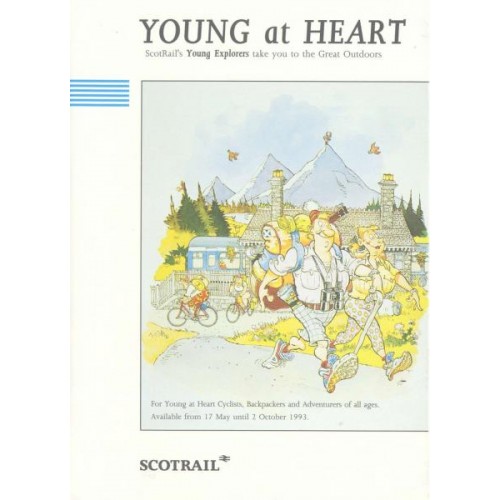
Encyclopedia of Titled Trains
Friday, 16 March 2012
4472
I have refrained from entering the minuitaie of this debate. I am not someone who enjoys causing anyone any trouble. The very latest development announced earlier today is such that a link to the press release has to be given. No doubt my readers will explore further for themselves. When I last looked the wikipedia page for the engine had not changed since last April's unveiling although a lot has taken place meantime.
Some more links
http://www.bbc.co.uk/news/uk-england-york-north-yorkshire-17405264
http://www.bbc.co.uk/news/uk-england-york-north-yorkshire-16076699
Also relevant to add from a couple of days later. The death of Alan Pegler is confirmed and Steve Davies at the NRM has issued a press release http://www.nrm.org.uk/AboutUs/PressOffice/PressReleases/2012/March/alanpegler.aspx
Some more links
http://www.bbc.co.uk/news/uk-england-york-north-yorkshire-17405264
http://www.bbc.co.uk/news/uk-england-york-north-yorkshire-16076699
Also relevant to add from a couple of days later. The death of Alan Pegler is confirmed and Steve Davies at the NRM has issued a press release http://www.nrm.org.uk/
Friday, 10 February 2012
VISIT TO THE “FORSYTHE COLLECTION” AT THE NATIONAL RAILWAY MUSEUM
VISIT TO THE “FORSYTHE COLLECTION” AT THE NATIONAL RAILWAY MUSEUM
Reverend John B. Davies (retired) took a trip 08.02.12 from Deganwy to York to use The Forsythe Collection. Here are his reflections. He is the author of North Wales Coast, the story of Tourism and Transport, Gwalch, 2011 ISBN 978-1-84524-182-7. Other people able to offer feedback on using the Forsythe Collection are welcome to be in touch. John can be found on Facebook.
On a cold February day, I travelled to the National Railway Museum at York to look at some of the items in the Robert Forsythe collection. The range of transport publicity handbills and books was like a journey through history and provided me with a most interesting and productive day. These books and leaflets tell much more than basic information on times and fares. They tell the story of how life was changing. This is very evident in looking at the transport publicity of the 1960s, the decade which saw the biggest social changes of the 20th century. It was the time when steam trains came to an end (except of course on preserved railways), a time when many railway lines were closing, and bus companies were struggling to survive. The 60s was very much the “swan song” decade for the pleasure steamers which once provided scenic trips from many places around the coasts of Britain.
The publicity materials I viewed were a timely reminder of how transport systems cannot be considered in isolation. Transport is about people and when social habits change, then transport publicity changes. Good publicity is essential for public transport operators and a look through the publicity material of the second half of the 20th century showed how the public began to expect better quality publicity material.
My own particular interest is in the history of the transport systems of North Wales and it is the publicity items of these systems, together with some interesting material relating to other areas that occupied my day at the NRM.
I began by looking through a box of Crosville bus timetable books. Of particular interest were some booklets that give details of rail replacement bus services following the closure of many railways in North Wales as a result of the Beeching Axe.
In 1965, the eastern part of the Cambrian main line between Whitchurch and Welshpool via Oswestry was closed. It is interesting to compare the times of the trains and that of the buses which replaced them, for example a train (which stopped at all stations) took 1hour 33 mins from Whitchurch to Welshpool, while the bus that replaced it took 2 hours 8 mins. The bus involved a change at Oswestry while the train was a through journey which from Welshpool continued to Aberystwyth.
Another line which closed under Beeching in 1965 was the Ruabon to Barmouth line. A train from Ruabon to Barmouth took 2 hours 5mins, while the bus that replaced it took 2 hours 52 mins. Even today with much improved roads, the bus takes 2hrs 17mins.
Another line which was replaced by buses was Chester - Mold - Denbigh - Ruthin. In 1962 (the year the line closed), a train from Chester to Denbigh took 1 hour 20 mins while the bus that replaced the train took 1 hour 40 minutes.
Next I looked at some very interesting publicity material for pleasure steamers. The oldest handbill referred to steamer sailings from Liverpool to North Wales in the 1890s. There was plenty of material to look at from two steamship companies which operated on the Welsh coast; P & A Campbell in the south and the Liverpool and North Wales Steamship Co in the north. Early publicity shows how the L & NWSS provided services to many destinations, Rhyl, Rhos-on-Sea, Llandudno, Bangor, Beaumaris, Menai Bridge, Caernarfon, Bardsey Island, Amlwch, as well as providing a service from Llandudno to the Isle of Man. In South Wales, Campbells provided services from Cardiff, Penarth, Barry, Porthcawl, Swansea, Mumbles and Tenby on the Welsh side of the Bristol Channel, while on the English side services were provided from Bristol, Porishead, Clevedon, Weston, Watchet, Minehead, Lynmouth, Ilfarcombe, Bideford and Clovelly as well as Lundy Island.
As the 1960s dawned and steamer trips became less popular, there is a noticeable reduction in the services offered and destination served. However, some interesting trips are advertised in the 1960s. A long day excursion by steamer from Cardiff to Tenby is advertised. It takes more than 6 hours each way, but must have been a wonderful trip.
The longest steamer trip along the coast of Wales was surely a voyage from Cardiff to Menai Bridge. The steamer, Queen of the Isles left Cardiff at 0800 and sailed all along the South Wales coast then across Cardigan Bay and along the north coast of the Llyn peninsula to arrive at Menai Bridge on Anglesey. The ship left Cardiff at 0800 and was scheduled to arrive at Menai Bridge at 2330. A coach which was provided for passengers to return to Cardiff, left Menai Bridge at 0030 and arrived at Cardiff at 0715. This “one off” voyage was clearly a positioning trip for the ship, but there must have been people who made the trip.
By then 1970s most pleasure steamer services around the British coast had ceased, leaving only the car ferries. From the 1980s onwards when competition for passengers grew and improved methods of printing came into being, there was a noticeable change in the quality of the publicity leaflets, with greater use of colour.
To return to trains. The practice of naming principal expresses began in the very early days of railways with such trains as The Irish Mail, the Royal Scot and the Flying Scotsman. From 1948 onwards, British Railways realised the value of giving greater publicity to named trains and a lot more trains were named. I was interested to see the leaflets relating to these. The fastest train of the day on each main route was usually given a name, From the late 20th century, with the introduction of faster trains on all main routes, it became less popular to name trains, and by today, the practice has virtually ended. As with the other items in this collection, a look through the named trains publicity provided an interesting insight into the history of railway publicity.
The publicity of the Isle of Man Steam Packet proved of great interest, particularly that of the 1950s and 60s, when the Isle of Man was a very popular tourist destination for staying visitors and day trippers. As social habits changed, so did holiday habits and by the mid 1970s, tourist numbers were declining. New and improved publicity material from this time was an indication the company was facing competition, reducing the size of its fleet, and serving fewer destinations. A look through the publicity for MacBraynes services on the west of Scotland showed how travel habits had changed. A route which had been publicised since Victorian times was from Glasgow to Inverness, known as the Royal Route. This involved steamer sailings and connecting buses and took the best part of two days. Passengers left Glasgow just after 7am for Ardrishaig and then travelled by bus to Oban where they stayed overnight. Next morning they travelled by steamer from Oban to Fort William an after a short train journey to Banavie, travelled by steamer the length of Loch Ness to Inverness. After World war 2, the Inverness connection was no longer advertised and the steamer journey started from Gourock rather then Glasgow. By 1969, with improved roads, the steamer service from Gourock to Ardrishaig ceased.
Also I looked at interesting publicity material of steamer excursion services in and across the English Channel, and in the Thames and Medway estuaries. My day went all too quickly and I resolved to visit the NRM again soon to see more of this interesting material of the Forsythe Collection.
Subscribe to:
Posts (Atom)


 Posts
Posts

